01
Clay
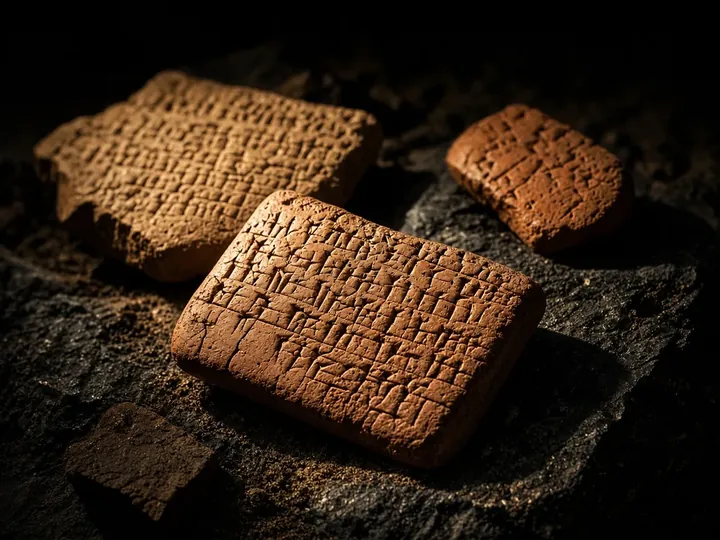
Before a book could be held, writing was pressed into wet clay. In Mesopotamia, more than five thousand years ago, wedge-shaped marks set accounts, laws, and stories into tablets made to last.
도메인 매물
The Book of the AI Era
A five-letter .ai name in which the word book sits beside the extension that has become the public face of artificial intelligence. One concise brand for the companies writing, translating, teaching, and publishing the next library.

The Story
The book did not begin as something you could hold in one hand. It has changed its body several times. This is the short arc of that change — and the name that waits at the end of it.
01
Before a book could be held, writing was pressed into wet clay. In Mesopotamia, more than five thousand years ago, wedge-shaped marks set accounts, laws, and stories into tablets made to last.
02
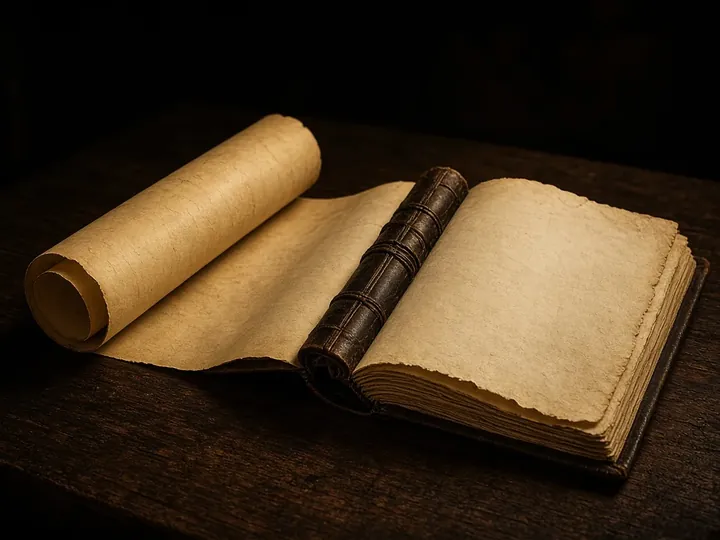
The ancient Mediterranean world read on scrolls. In late antiquity those rolls gave way to the codex: sheets bound at a spine — the form we still mean when we say “book.”
03
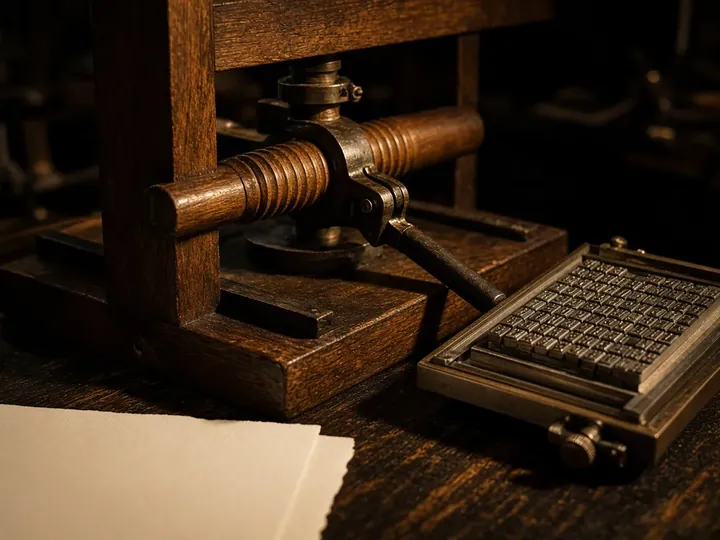
Printing let a text be set in metal and struck again and again. In Korea, the Buddhist anthology Jikji was printed with metal movable type in 1377 — the oldest surviving book made that way. In the 1450s, Johannes Gutenberg’s press in Mainz carried movable type across Europe, and books began to multiply.

04
In 1971, Project Gutenberg began placing texts on computers. In the 2000s, dedicated e-readers made whole libraries pocket-sized. The book had learned the screen.

05
Now writing itself is changing. Authors, translators, and publishers already use artificial intelligence to draft, edit, and carry a work from one language into another. The next library will be written with new tools — and it will still need a name.
kbook.ai is a short name for that chapter: knowledge, the culture of the book, and intelligence, held in five letters.
A short film
From clay to light — a short film of the book’s changing body. No soundtrack; typography is added over the picture.
The name
The name is short, speakable, and built from a familiar word. The letter K opens more than one reading — none of them require a longer, invented coinage.
A compact stem for knowledge products, knowledge bases, and tools that turn research into something a person can actually read.
A natural fit for platforms around webtoons, manhwa, and Korean-language storytelling — and for AI that translates comics and literature across markets.
A name that suggests a book, made intelligent — in the lineage of pocket-sized digital reading, without any affiliation to Amazon or Kindle.
Buyers
The name is most useful to teams whose product is a book, a library, or a story — written, translated, or taught with AI.
Products that draft, edit, illustrate, or assemble books and ebooks with AI, from first manuscript to finished edition.
Studios and platforms that localize webtoons, manhwa, manga, and graphic literature for new languages and regions.
Education products that turn lectures, courses, or research into readable works, tutors, or courseware under a publishing-like brand.
Imprints, tools, and marketplaces looking for a short .ai identity in the business of commissioning, editing, and distributing written work.
The sale
이 도메인은 현재 매물입니다. 즉시 구매(Buy Now) 문의와 서면 제안을 받습니다. 나중에 공개 경매가 열릴 수 있습니다. 경매 날짜는 정해지지 않았습니다.
이 페이지에는 가격이 나와 있지 않습니다. 진지한 구매자는 서면 제안을 보내거나 비공개 미리보기를 요청할 수 있습니다. 정식 경매가 열리면 이 페이지에서 먼저 알립니다.
Market context, not an appraisal of this name: in calendar year 2025, reported .ai domain sales reached $22 million across 7,335 transactions, including 27 six-figure sales. Source: TLD Investors, 15 January 2026.
Stay close